
DBE Cats and the TICA Policy: When Genetics Meets Show Regulation
Over the past months we have received several questions about TICA shows and our position on the current DBE policy. For clarity and transparency, we would like to explain our perspective.
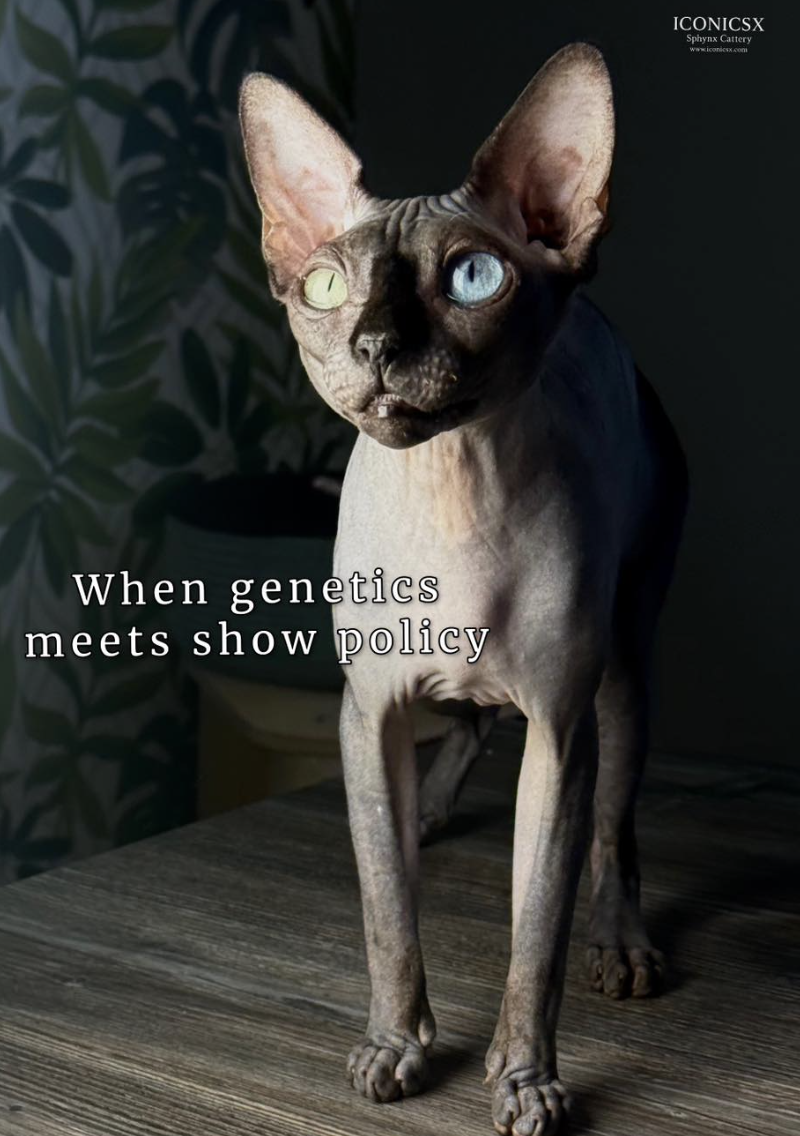
IconicSX has never competed at TICA shows, the nearest TICA show to our cattery is over seven hours' drive away, and we have always prioritised the wellbeing and comfort of our cats over travel for competition. Our show achievements have been earned under GCCF, where shows are in most cases significantly closer. However, we chose to speak up on the TICA DBE policy because it is a structural issue, not a personal one. We recognise that other breeders working transparently with DBE are directly affected. IconicSX has formally challenged this with the TICA Genetics Committee, the TICA Sphynx Breed Committee, and the Board of Directors, and is awaiting a response.
Under TICA rules, healthy heterozygous DBE Celestial and DBE Altai cats with no documented health consequence in peer-reviewed literature can be disqualified from the show ring for having blue or odd eyes. The Sphynx breed standard does not judge eye colour, and TICA requires no DNA or health testing before registration or competition.
Since DBE expression ranges from minimal white to high-grade white, it is visually indistinguishable from KIT-associated blue and odd eyes without DNA testing. Disqualification therefore relies NOT on genetics but on what the breeder discloses or what is passed on through gossip, personal bias, or flagging within a governance structure where individuals involved in shaping breed standards and disqualification policies also compete in the show ring.
At the same time, Dominant White and White Spotted cats with blue and odd eyes carrying a scientifically confirmed link to congenital deafness at rates of 40–80% and a direct association with Waardenburg-like syndrome continue to compete without restriction, without mandatory BAER testing, and without disqualification.
This is not a fair or consistent standard. It is discrimination against transparent breeders working with a genetically sound trait, while cats carrying documented health risks compete freely.
While show titles and rosettes have never been our measure of quality, policies governing competition should be coherent, evidence-based, and applied consistently. The current approach fails to meet that standard.
#DBE #DBECelestial #DBEAltai #SphynxCats #SphynxBreeder #SphynxGenetics #FelineGenetics #ResponsibleBreeding #EvidenceBasedBreeding #TICA #CatShows #BreedStandards #PedigreeCats #PurebredCats