DBE& ODD EYED Programme
Built on ethics, health, and dedication,
our cattery offers truly exceptional and healthy Sphynx cats.
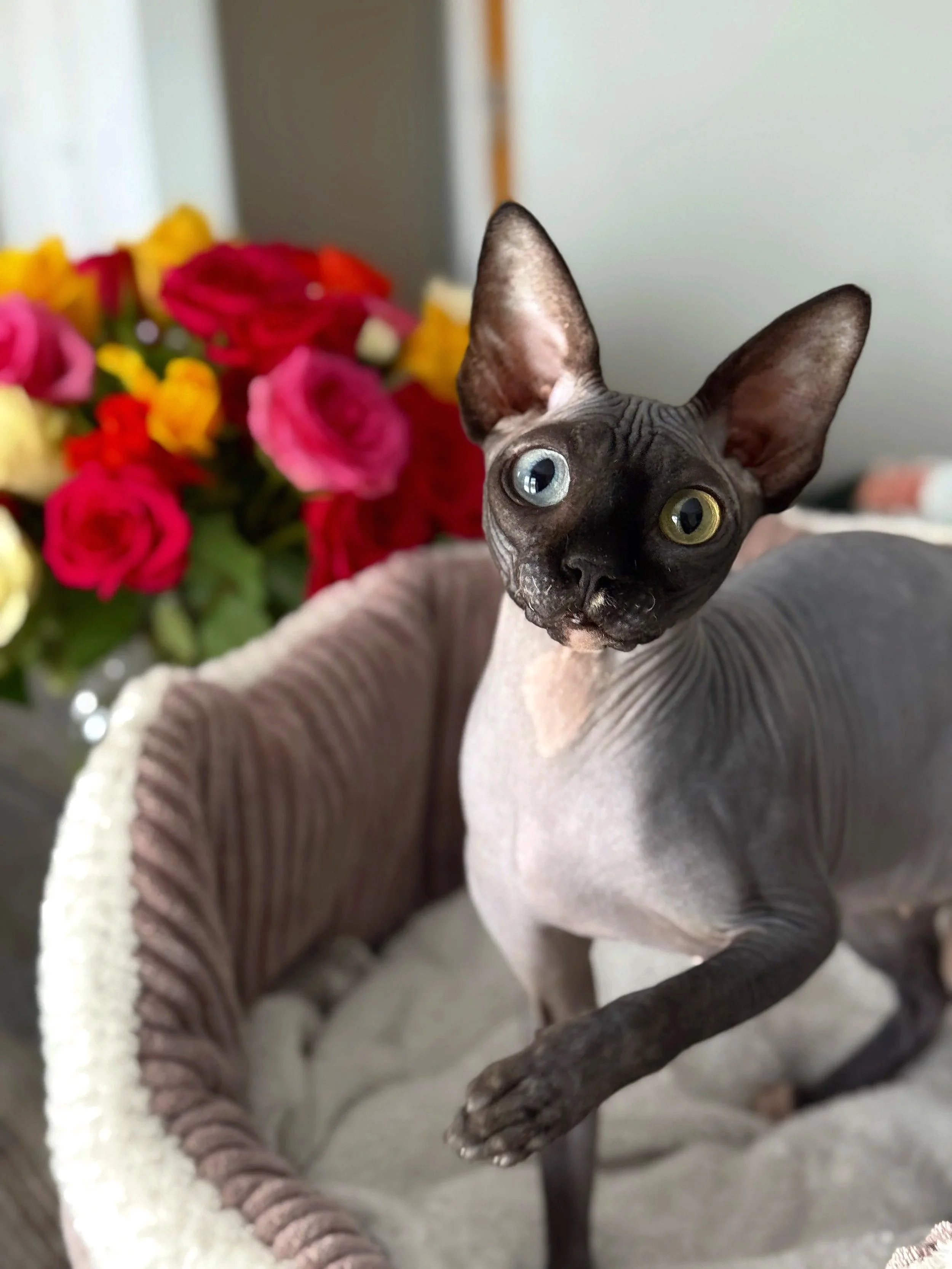
1st Genetically confirmed DBE-CEL Line in Sphynx Cat
Our DBE breeding queen Sofia of IconicSX is genetically confirmed heterozygous N/DBE-CEL — one of thebest-characterised Dominant Blue Eye (DBE) variants, and one not associated with deafness in heterozygous cats in the studies published to date. This makes it a cornerstone of our breeding programme.
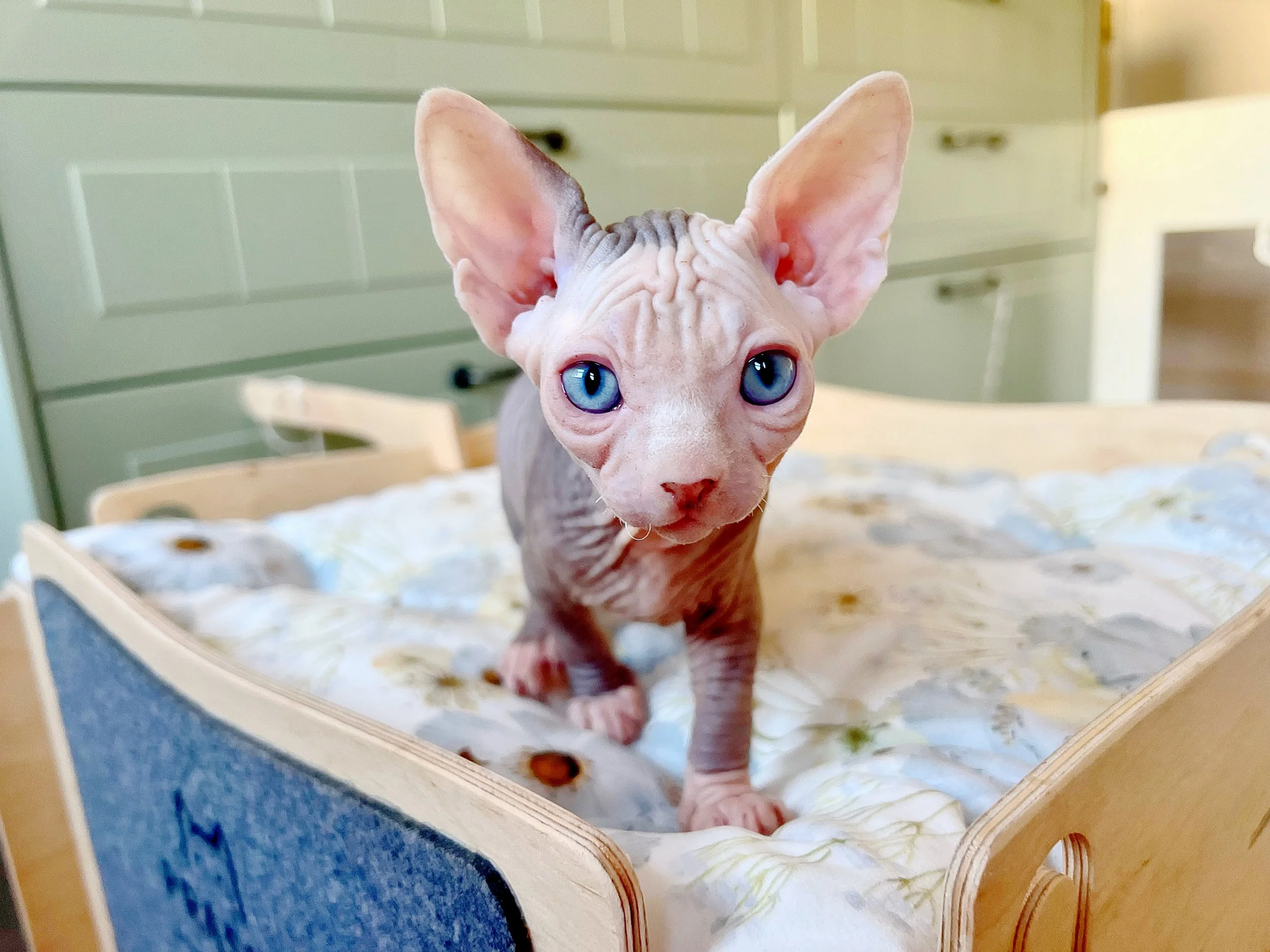
DBE-RE Gene: Safeguarding Hearing and Health.
None of our cats carry the DBE-RE variant — the coding PAX3 variant that has been directly associated with congenital hearing loss and a phenotype resembling human Waardenburg syndrome. Our DBE line is based on heterozygous DBE-CEL, which has not been associated with deafness, and we do not combine different DBE variants.
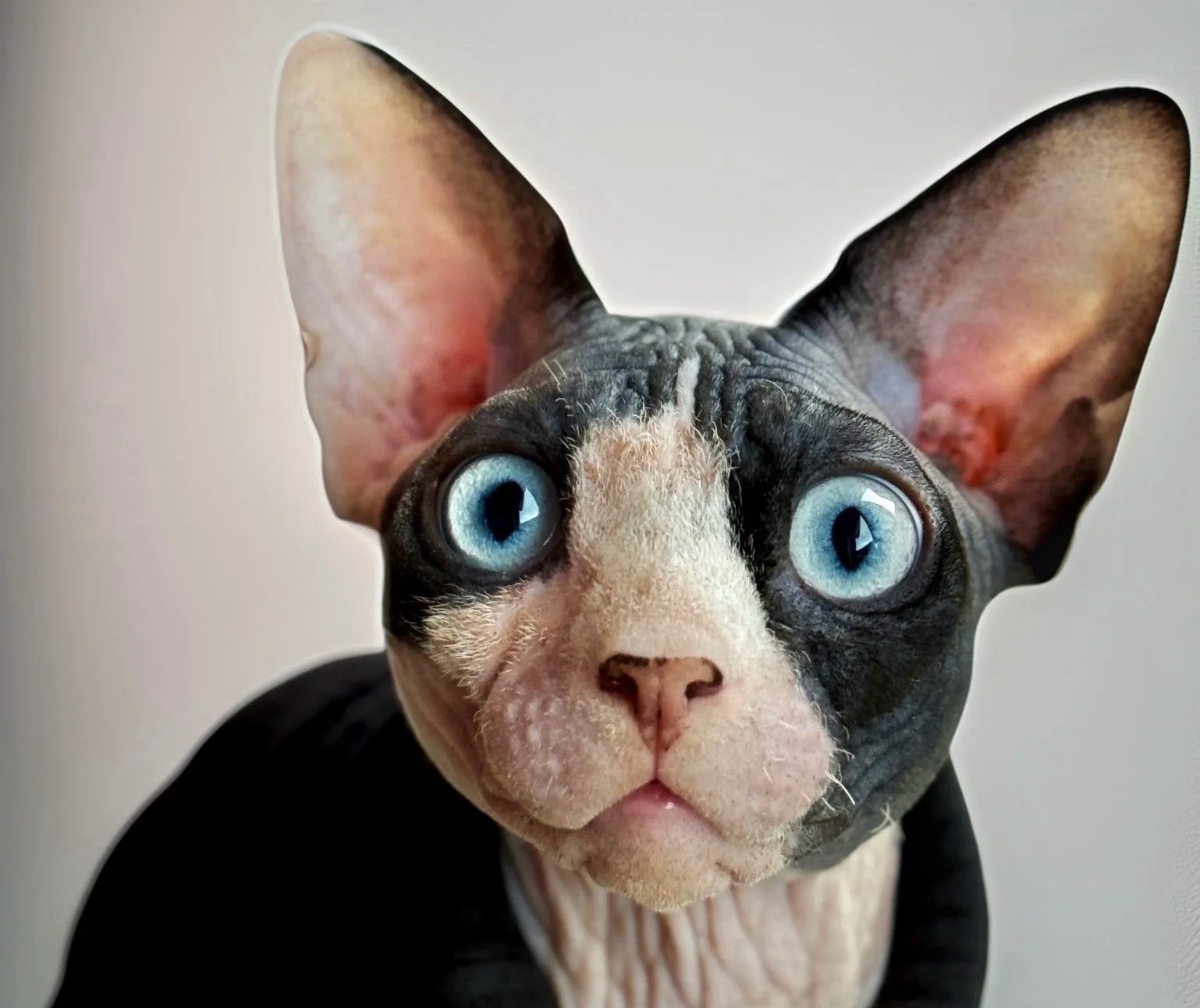
BAER Tested Cats and Kittens.
All of our cats and kittens undergo BAER (Brainstem Auditory Evoked Response) testing to objectively assess hearing in each ear. All results to date have confirmed normal bilateral hearing.
BAER testing is an essential part of our commitment to health, transparency and responsible genetic planning.
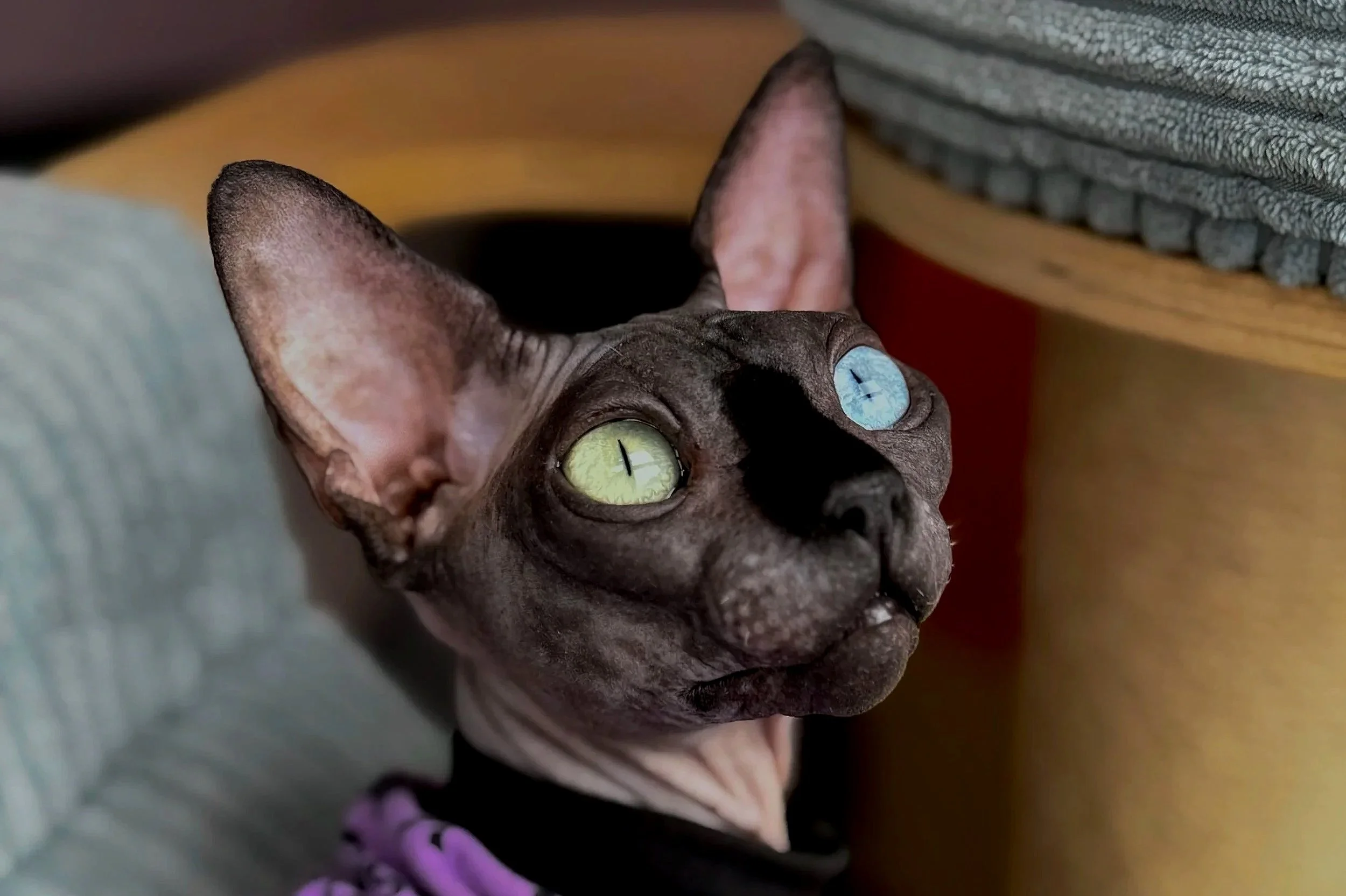
Advancing Research on the Dominant Blue Eye Gene.
We actively contribute DNA samples from our cats to multiple research projects aimed at understanding the Dominant Blue Eye (DBE) gene. By participating in these studies, we aim to support the development of more accurate genetic testing and provide valuable insights into the responsible breeding of DBE cats.
“Thank you so much for the samples, we so greatly appreciate your support in test development. (…) Regarding the test development, the samples are invaluable. It is a surprisingly difficult mutation to test for multiple molecular biology-related reasons (sequence complexity, etc.). Your samples will allow us to try different approaches and hopefully develop a robust test.”
Melissa L. Cox, PhD – Certagen / VHL Genetics (March 2026)
FAQs
-
The difference is documentation. Every claim we make about our cats is supported by individual test results that can be seen and verified.
• A confirmed variant, not a guess. Our line is built on DBE-CEL, identified individually through variant-specific DNA testing — not assumed from eye colour, pedigree or appearance. We know exactly which DBE variant our cats carry and can document it.
• A well-characterised DBE variant. DBE-CEL is one of the best-characterised non-coding PAX3 variants associated with Dominant Blue Eyes. Published research has not found an association between heterozygous DBE-CEL and deafness. Our cats do not carry DBE-RE, and we do not combine different DBE variants.
• Hearing confirmed, not assumed. Our DBE cats and kittens undergo BAER testing, allowing hearing in each ear to be objectively assessed rather than judged from behaviour alone.
• Extensive health screening. Every breeding cat is DNA-tested for more than 70 inherited variants, with clear results for the disease-associated variants included in our current screening panels, alongside regular HCM echocardiographic screening.
• Individual certification for every DBE kitten. Each DBE kitten is individually DNA-tested and leaves with its own laboratory certificate confirming the specific PAX3 variant identified and its zygosity. We do not rely solely on a parent’s result to determine a kitten’s DBE status.
For us, DBE is not simply about producing blue eyes. It is about knowing the genetics behind them, documenting hearing and health, and giving every adopting family evidence they can verify for themselves.
-
Are DBE eyes the same as blue eyes in white or colourpoint cats?
No — they look similar but come from completely different genetics.
Blue eyes in cats can arise through several unrelated mechanisms:
• DBE (PAX3): a dominant blue-eye variant that produces blue or odd eyes independently of coat colour. This is what our line carries.
• Colourpoint (cs/cs, TYR gene): the Siamese-type pattern, where blue eyes appear only in pointed cats. This is a form of partial albinism affecting pigment — a different gene entirely.
• White and white spotting (KIT gene): dominant white and white-spotting alleles can also produce blue or odd eyes, and dominant white carries its own, separate risk of deafness.
Because these different genes can all produce blue eyes, appearance alone cannot tell them apart. A blue-eyed white or pointed cat is not a DBE cat unless it also carries a DBE (PAX3) variant — and the only way to know is a variant-specific DNA test.
-
DBE is a dominant gene, but expression is unpredictable. Statistically, there’s a 50/50 chance of inheritance — yet it behaves like genetic roulette. A whole litter may have DBE, or none at all. Some kittens can carry the gene silently (latent DBE) without showing blue eyes. The only reliable way to confirm DBE status is through DNA testing.
-
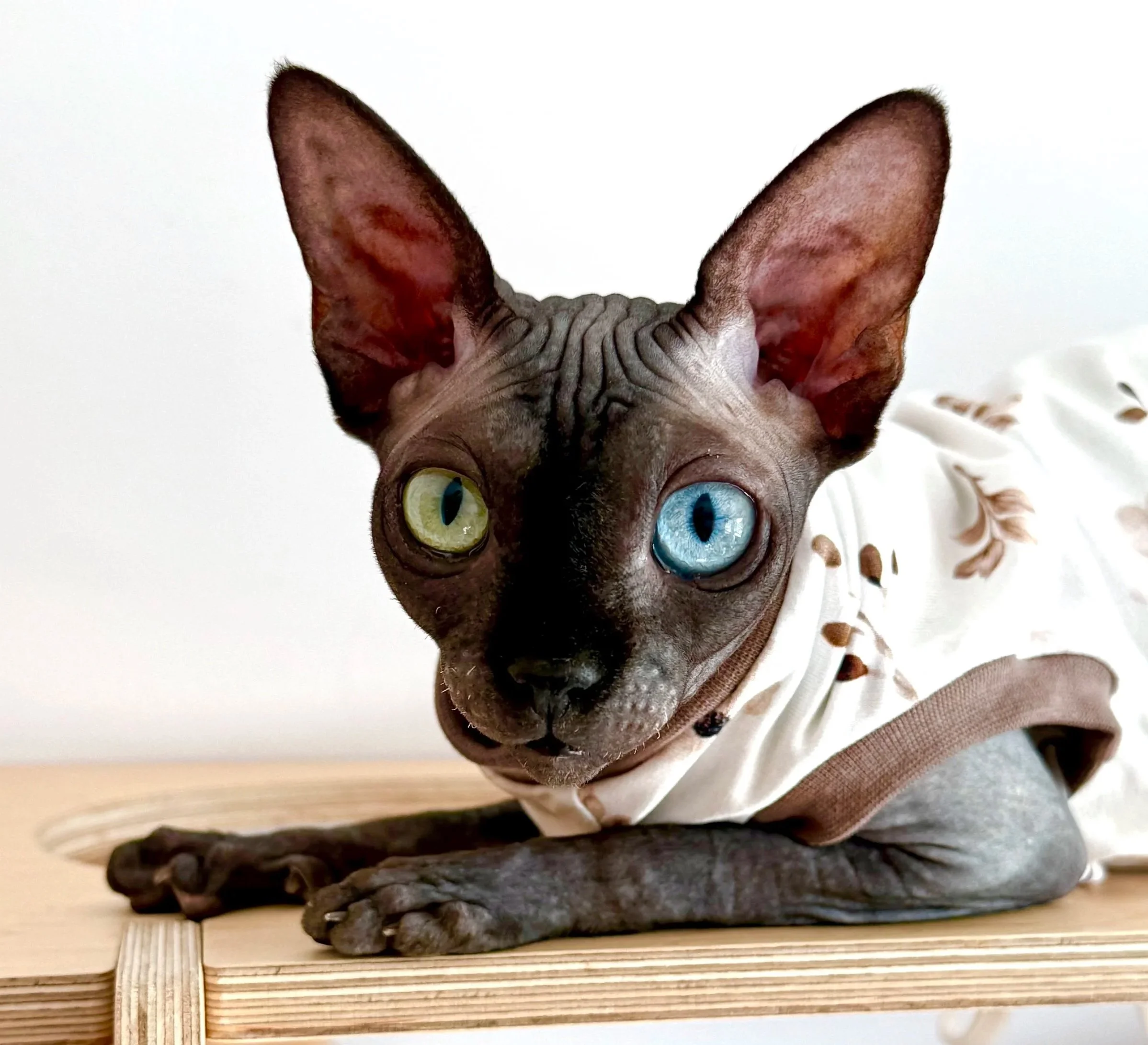
True odd-eyed cats (also called heterochromia) have two eyes of completely different colours — one blue and one fully pigmented (green, copper, amber, or gold). Each eye has only one pigment type.
Sometimes, one iris may contain both blue and normally pigmented areas, a phenotype known as sectoral heterochromia or a mosaic eye.
Although sectoral heterochromia can occur in cats with genes affecting pigmentation, including white-associated and DBE phenotypes, at IconicSX we do not select mosaic-eyed cats for our breeding programme. Our preference is for clearly expressed complete heterochromia or fully blue eyes, supported by variant-specific DNA testing and normal bilateral BAER results
-
Not in heterozygous cats studied to date. Published research has not found an association between heterozygous DBE-CEL and deafness. Because hearing outcomes can differ between DBE variants and genotypes, all IconicSX cats and kittens are BAER-tested to confirm their individual hearing status.
-
Because combining different genetic mechanisms capable of producing blue eyes can obscure the relationship between genotype and phenotype. DBE (PAX3), dominant white and white spotting (KIT), and colourpoint (TYR) can all influence eye pigmentation, meaning that appearance alone cannot reliably establish the genetic cause of blue eyes.
Dominant white also carries its own independent association with congenital deafness. At present, there is insufficient published evidence to quantify any additional hearing risk specifically from combining DBE-CEL with dominant white. For this reason, IconicSX keeps these genetic mechanisms separate as a precautionary breeding policy and to maintain clear genetic traceability.
Our DBE-CEL line is maintained with individually confirmed, variant-specific DNA results, allowing the genetic basis of the DBE trait in every cat within our programme to be documented rather than assumed from appearance or pedigree.
-
No. DBE has variable expression, so it doesn’t always produce the same result. A DBE cat may have two blue eyes, one blue and one normally coloured eye (odd eyes), or just part of one iris blue (sectoral heterochromia). The shade varies too. Some cats carry a DBE variant without showing blue eyes at all — these are latent carriers, and they can still pass the variant to their kittens. This is exactly why appearance alone can’t confirm DBE, and why we rely on DNA testing rather than eye colour.
-
Because we don’t rely on appearance — we confirm it by DNA. Every DBE cat in our programme is individually tested at an independent laboratory (PetGeno), which identifies the specific PAX3 variant it carries. That result isn’t inferred from eye colour, pedigree or the parents’ status — it’s a direct test of that individual cat.
Each DBE kitten leaves with its own DNA certificate stating the variant identified and its zygosity, so you can see the evidence yourself rather than taking our word for it.
A cat should not be claimed as carrying a specific characterised DBE variant unless that variant has been confirmed through genetic testing. For every DBE cat in the IconicSX programme, that confirmation exists on an individual laboratory certificate.