Latent DBE, Red Reflex
and the Cats Sold as "DBE" That Aren't
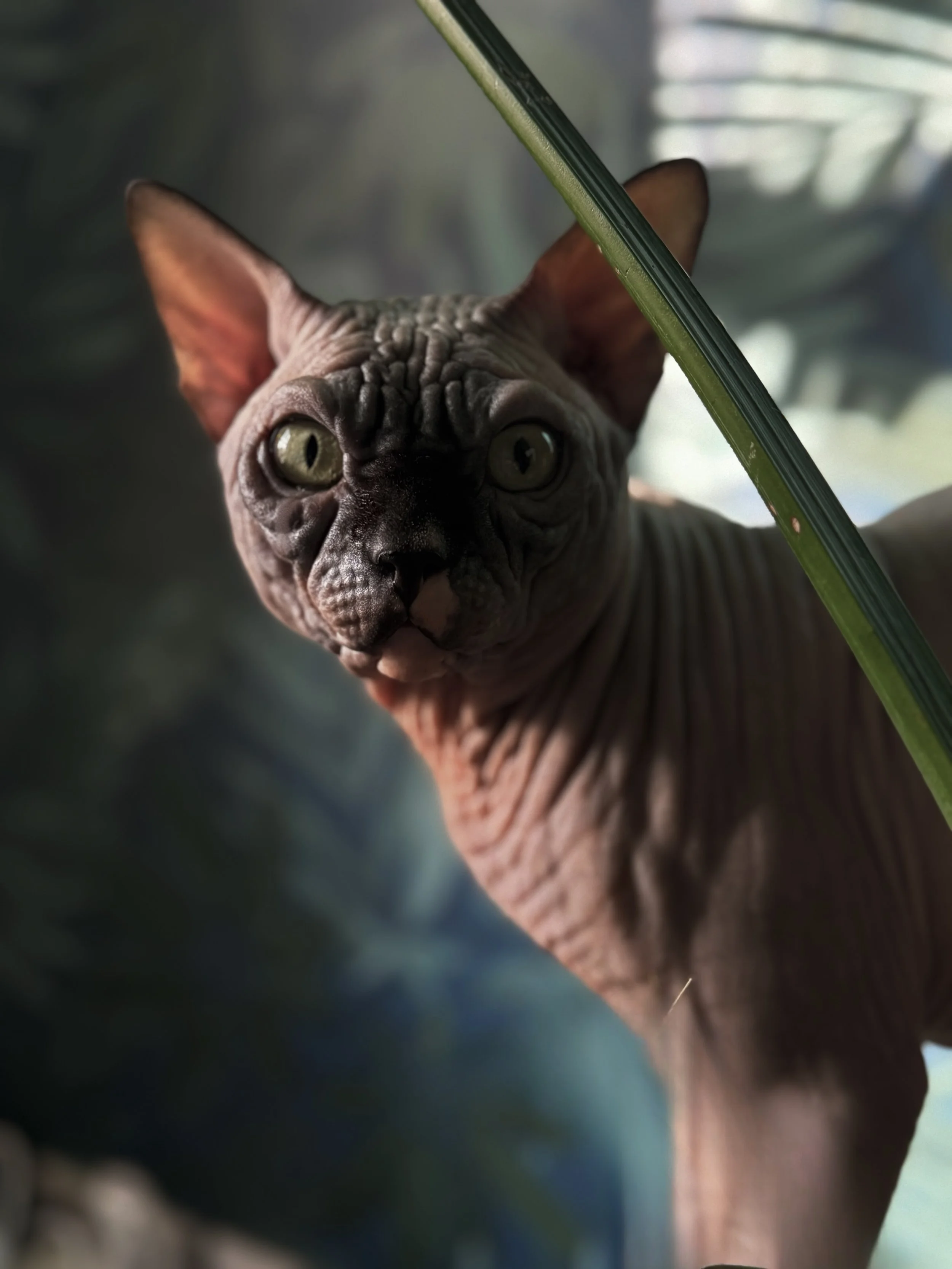
Not every cat that carries the Dominant Blue Eye gene will show it in their eyes.
Some are latent carriers — genetically positive for DBE, but with yellow, green or otherwise normally coloured eyes rather than blue.
A cat can carry a DBE variant with normally coloured eyes, and appearance alone cannot rule DBE in or out.
This matters because, in the absence of genetic testing, some breeders rely on anecdotal signs — most commonly a "red reflex" seen in the pupil under camera flash — and promote it as proof of a latent DBE carrier.
The red reflex is not reliable evidence of DBE. It occurs when a camera flash reflects from the back of the eye rather than from the tapetum lucidum, and it can appear in any eye with reduced pigmentation — including colour-dilute and pointed cats — not only in DBE carriers. It can also reflect normal variation in the tapetum (which is immature and differently coloured in young kittens) or, in some cases, an underlying eye problem such as intraocular bleeding or inflammation.
A red reflex may sometimes be seen in cats that do carry a DBE variant, but because it has many unrelated causes, its presence cannot confirm DBE and its absence cannot exclude it. Using it as evidence of genotype is scientifically unsound. Only a validated, variant-specific DNA test can establish whether a cat carries a known DBE variant.
A Cautionary Case: When DBE Is Hidden
The following reflects breeder observation within the DBE community, not conclusions from peer-reviewed research. Where points are supported by published studies, this is noted.
A latent carrier is a cat that carries a DBE variant but does not show it — normal-coloured eyes, no obvious blue, nothing visible to flag it as a DBE cat. Non-expressing carriers have been documented for DBE-CEL, DBE-ALT and DBE-RE.¹ ² ⁴
This is where the real danger lies. Because a DBE variant can be carried invisibly, a breeder without genetic testing cannot always know which of their cats are DBE. Two situations follow directly from this:
Pairing two DBE cats without realising it. If one or both parents are latent, a breeder may believe they are making a safe, single-variant or non-DBE mating while in fact combining two DBE cats — producing homozygous or compound-heterozygous kittens by accident.
Pairing a visible DBE cat with a hidden carrier. A cat that looks entirely non-DBE may still carry a variant and pass it on, so a mating that appears to introduce "fresh, clear" blood may in fact double up on DBE.
This is not hypothetical. In the published literature, the incomplete penetrance of DBE was confirmed by blue-eyed kittens born to two non-blue-eyed parents — the very pattern that led to the decline of the historic Ojos Azules line.²
Some DBE breeding lines have contained more than one genetically distinct DBE variant. Published research has confirmed that compound heterozygous genotypes can occur, and deafness has been documented in DBE-CEL/DBE-ALT compound heterozygotes.
Other outcomes reported within breeder communities, including extensive white patterning or less predictable development, remain observational and their causes have not been established. They should therefore not be attributed directly to a particular DBE combination without supporting genetic and clinical evidence.
The key breeding implication is that latent expression can make genotype impossible to determine from appearance alone. Individual, variant-specific genetic testing is therefore essential before breeding decisions are made.
What the research establishes about combining variants: compound heterozygotes occur, deafness has been documented in DBE-CEL/DBE-ALT compound heterozygotes, and stillborn homozygous and compound kittens have been reported with limb and head-morphology abnormalities.¹ Alongside this, breeders working with combined lines have reported less predictable problems — including extensive "high white" patterning (sometimes described as panda or chipmunk), occasional deafness, and individual kittens that struggled more than their littermates. These are breeder observations; their causes are not established and should not be assumed to result directly from the variants themselves.
The lesson is the same from both directions. Latency means you cannot tell DBE status by looking — so pairing decisions based on appearance can combine variants entirely by accident. Only individual, variant-specific genetic testing shows what a cat actually carries.
References
Abitbol M, Couronné A, Dufaure de Citres C, Gache V. A PAX3 insertion in the Celestial breed and certain feline breeding lines with dominant blue eyes. Animal Genetics. 2024;55(4):670–675. doi:10.1111/age.13433
Abitbol M, Dufaure de Citres C, Rudd Garces G, Lühken G, Lyons LA, Gache V. Different Founding Effects Underlie Dominant Blue Eyes (DBE) in the Domestic Cat. Animals. 2024;14(13):1845. doi:10.3390/ani14131845
Abitbol M, Cloquell A, Kaczmarska A, Holmes K, Lühken G, Macaulay K. Dominant blue eyes in Maine Coon cats: New PAX3 variant and updated phenotypic data. Animal Genetics. 2025;56(3):e70020. doi:10.1111/age.70020
Why This Matters ?
Right now, a lot of cats are being sold as "DBE" or "latent DBE" based only on how they look — or on flash photographs of newborn kittens with eyes glaring red, presented as proof of a hidden variant.
Some are actually dominant white (W), white spotting (ws), or colourpoint (cs/cs) — advertised as DBE. None of those traits prove the cat carries a DBE variant; they are separate genetic mechanisms that can produce blue eyes or white in completely different ways.
There are also kittens sold as "DBE carriers" with no documented DBE parent at all. In other cases both parents have blue eyes but may carry different, unverified DBE variants — a genuinely risky mix, and exactly the kind of accidental combination that can destabilise a line.
What makes it worse is that many of these sales happen with no contract, no test results, and no idea which DBE variant the cat actually carries — if any.
Too many breeding decisions rely on quick visual guesses:
"The parents had blue eyes, so the kittens must carry DBE."
"The pupil reflected red as a kitten — it must be latent."
"It looks like DBE, so it must be DBE."
When different genetic mechanisms capable of producing blue eyes or white spotting are combined, phenotype alone becomes even less reliable for identifying the underlying cause. Combining different DBE variants may also produce compound genotypes with outcomes that differ from those seen in simple heterozygotes. This is why breeding decisions should be based on confirmed genotype rather than appearance or assumed lineage.