Reference Material: DBE-Celestial and the Case for Genetic Clarity
We were recently contacted by Certagen GmbH / VHL Genetics and asked to donate verified reference samples from our DBE-Celestial cats to support their validation process. It means the genotype of our cats is confirmed, the phenotype is consistent, and the records are robust enough to serve as scientific reference material.
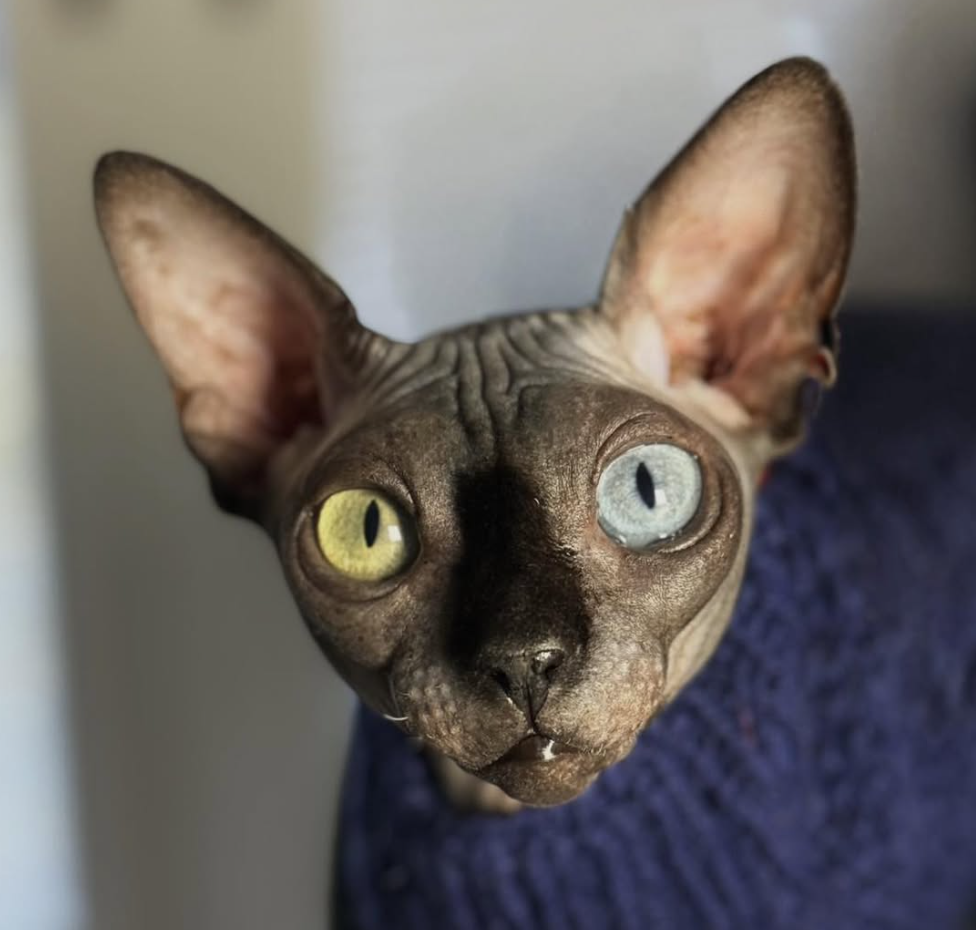
DBE-Celestial is a reviewed mutation with no documented link to structural defects, Waardenburg-like syndromes, or congenital hearing loss. Its biological pathway differs from the mechanisms responsible for blue eyes in Dominant White or heavy white-spotting patterns, where hearing risk is well established. The difference is genetic, not cosmetic.
For that reason, we keep the line genetically defined. We do not dilute DBE by combining it with Dominant White or white-spotting genes . When different genes producing blue eyes are mixed together, the genetics become less transparent and the distinction between lower-risk and higher-risk mechanisms becomes blurred. In that situation, if hearing loss or structural issues appear, the newer or less familiar mutation is often blamed, even when the underlying risk may lie elsewhere. This is not about one gene being “good” and another being “bad.” It is about understanding which mechanism is responsible for which risk and keeping those mechanisms clearly identifiable.
In some show systems, unfamiliar genetics are still subject to inconsistent interpretation, while familiar patterns are rarely questioned. The pressure exists, but we choose clarity.
Our breeding structure remains fixed: genetic health first, coefficient of inbreeding second, temperament third. Appearance follows from those foundations rather than directing them.
Every our breeding cat undergoes a full genetic panel; if a preventable variant appears, that cat does not breed regardless of phenotype or show recognition. Health is not negotiable in our breeding programme.
Clear data prevents misplaced blame.
If a mutation is safe, it should withstand scrutiny, and if it is documented, it should be shared.
Progress in breeding comes from testing, validating, and contributing data that strengthens the entire breed and community.
Responsibility should be proven, not proclaimed .
Technical note on DBE- CEL testing
The PCR-based assay previously offered by Dr. van Haeringen Laboratorium (VHL) for the K505 DBE-Celestial variant has recently been withdrawn after internal quality control showed inconsistent results. According to the laboratory, the DNA region surrounding this mutation is highly complex, which can lead to unreliable signals with certain primer designs.
This reflects the performance of a specific assay on a specific testing platform, not the biology of the variant itself.
At present, the variant continues to be offered commercially by PetGen in China only, which uses a different testing platform and primer design.
Such challenges are not unusual when developing assays for variants located in genetically complex pigmentation loci.
What Certagen said about our contribution
Following the receipt of our samples, Melissa L. Cox, PhD — Business Development Manager for Animal Genetics at Certagen GmbH — wrote:
“Thank you so much for the samples, we so greatly appreciate your support in test development (…) Regarding the test development, the samples are invaluable. It is a surprisingly difficult mutation to test for multiple molecular biology-related reasons (sequence complexity, etc.), which is apparently why only China is currently offering it commercially. Your samples will allow us to try out different approaches and hopefully eventually develop a robust test.”
Melissa L. Cox, PhD
Certagen GmbH — a VHL Genetics Company
#SphinxCat #SphynxCattery #SphynxBreeder #DBE #BluEyedSphynx
#CatGenetics #FelineGenetics #Certagen #VHLGenetics #EthicalBreeding
#GeneticTesting #IconicSX #DBECelestial #SphynxOfInstagram
#CatBreeder #HealthTestedCats #TICA #GCCF #HairlessCat #SphynxKitten