Understanding HCM in Sphynx Cats: What Every Breeder and Owner Should Know.
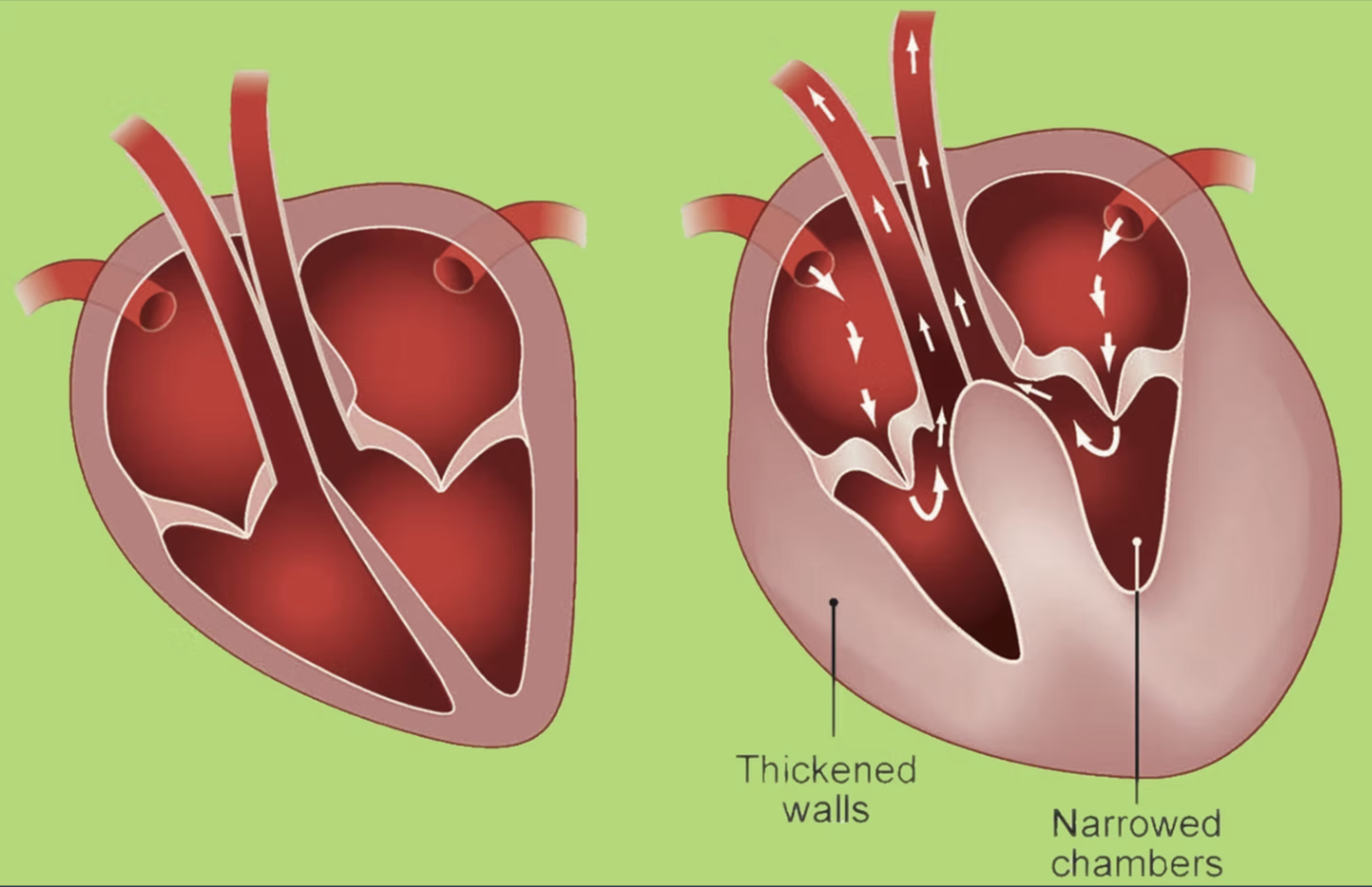
Hypertrophic cardiomyopathy — HCM — is the most common heart disease in Sphynx cats. It is genetic, it is dominant, and it is more prevalent in this breed than most people realise.
When researchers identified the HCM-associated gene in Sphynx, the data showed that roughly 75% of the breed carried at least one copy of the affected variant. That number alone should have changed how every breeder approaches their programme. For some, it did. For many, it didn’t.
How HCM Works Genetically
HCM follows autosomal dominant inheritance. That means a cat doesn’t need two copies of the variant to be at risk — one copy is enough. A single copy can lead to thickening of the heart muscle, which affects how the heart fills and pumps blood. Over time, this can progress to heart failure.
This is not a “carrier” situation where one copy is silent and harmless. In dominant conditions, one copy can cause disease. The severity varies between individuals — some cats develop clinical signs early, others may live years before symptoms appear, and some may never show obvious signs at all. But the risk is real, and it is inherited.
This is why genetic testing before breeding matters. If a cat carries the variant, every kitten it produces has at least a 50% chance of inheriting it. Without testing, that risk is invisible until a kitten — or an adult cat in someone’s home — develops heart disease.
Why Heart Scans and Genetic Tests Are Both Necessary
Genetic testing tells you what a cat carries. Echocardiographic screening tells you what the heart looks like right now. Neither one replaces the other.
A cat can carry the HCM variant and have a normal-looking heart at the time of scanning — especially if it’s young. HCM is age-dependent. A clear scan at two years old does not guarantee the cat won’t develop HCM at four or six. This is why annual screening matters, and why a single scan is never enough.
On the other hand, a cat can develop HCM without carrying the known variant. HCM is a complex disease influenced by multiple genes and, potentially, by environmental factors. The known variant explains a significant proportion of cases, but not all of them.
The responsible approach is to use both tools: genetic testing to identify known risk, and regular echocardiography to catch what genetics alone might miss.
The Role of Epigenetics
Beyond the DNA sequence itself, there is another layer: epigenetics. This refers to changes in how genes are expressed — turned on or off — without altering the underlying DNA.
Environmental factors can influence epigenetic gene expression. Diet, stress levels, exposure to illness, and living conditions can all affect whether a gene that is present actually becomes active. This is relevant to HCM because it means two cats with the same genetic variant may not develop the disease in the same way or at the same time. One may remain asymptomatic. The other may not.
This has practical implications. A breeder can control genetics through testing and selective pairing. But once a kitten leaves the cattery, the environmental factors — nutrition, stress, veterinary care, exposure to pathogens — are in the hands of the new owner. This is why transparency matters. Adopting families need to understand not just the genetic status of their kitten, but the ongoing care that supports long-term heart health.
Epigenetics does not cancel out genetic risk. It adds complexity to it. A cat that is genetically clear of the known HCM variant is still in a better starting position than one that carries it — regardless of environment.
Cardiac Biomarkers: Troponin I and NT-proBNP
In addition to echocardiography, there are blood-based markers that can support cardiac monitoring.
Troponin I is a protein released when heart muscle cells are damaged. Elevated levels can indicate active cardiac injury, even before structural changes are visible on an echocardiogram.
NT-proBNP (N-terminal pro-B-type natriuretic peptide) is released when the heart is under increased pressure or volume load. Elevated levels may suggest the heart is working harder than it should be.
Neither marker is diagnostic on its own. But used alongside regular echocardiography and genetic testing, they provide additional data points for monitoring cardiac health over time. Early detection means earlier intervention — and better outcomes.
What We Do
All of our breeding cats have undergone extensive genetic testing — including for the ALMS1 variant associated with HCM. All are genetically clear.
We conduct annual echocardiographic screening by a veterinary cardiologist to confirm cardiac health before any breeding decision. We also monitor Troponin I and NT-proBNP levels as part of our regular health protocol.
We provide a 2-year HCM warranty to every adopting family. This warranty is backed by documented genetic results and cardiac imaging — not by words alone.
We are transparent with adopting families about what HCM is, how it is inherited, and what ongoing care looks like. We provide guidance on diet, stress management, and veterinary monitoring, because genetic clearance is the starting point — not the finish line.
What You Can Do
If you are considering adopting a Sphynx kitten, ask the breeder:
What is the HCM genetic status of both parents? Ask to see the actual lab certificates — not a summary, not a claim on a website. Look for the microchip number on the certificate to confirm it matches the cat.
When was the last echocardiographic screening? It should be done annually, and ideally before each breeding. A scan done two years ago is not current.
What warranty is offered, and what is it based on? A warranty without documented testing behind it is just a promise.
HCM is manageable when it is taken seriously — at the genetic level, at the screening level, and at the level of daily care. The tools exist. The research exists. The question is whether breeders choose to use them.
Further Reading
For those interested in the science behind HCM in Sphynx cats, the following publications provide detailed information:
1. “Genetic Basis of Hypertrophic Cardiomyopathy in Cats” — Grzeczka et al., Current Issues in Molecular Biology, 2024
2. “A deleterious mutation in the ALMS1 gene in a naturally occurring model of hypertrophic cardiomyopathy in the Sphynx cat” — Meurs et al., 2021
3. “HCM-associated ALMS1 variant: Allele drop-out and frequency in Italian Sphynx cats” — 2023
4. “ACVIM consensus statement guidelines for the classification, diagnosis, and management of cardiomyopathies in cats”
5. “Hypertrophic cardiomyopathy in purpose-bred cats with the A31P mutation in cardiac myosin binding protein-C” — Scientific Reports, 2023