GENES DON’T LIE - Dilution Gene — When Colours Go Soft
Not every pastel is what it seems. And not every blue is actually… blue.
There’s a little gene (we call it dilution - “d”) that changes the way colour shows up in a cat’s coat — or skin, if you live with a Sphynx. It doesn’t wipe out the pigment; it just spreads it differently. Think of it like mixing paint with water. The colour’s still there, just softer.
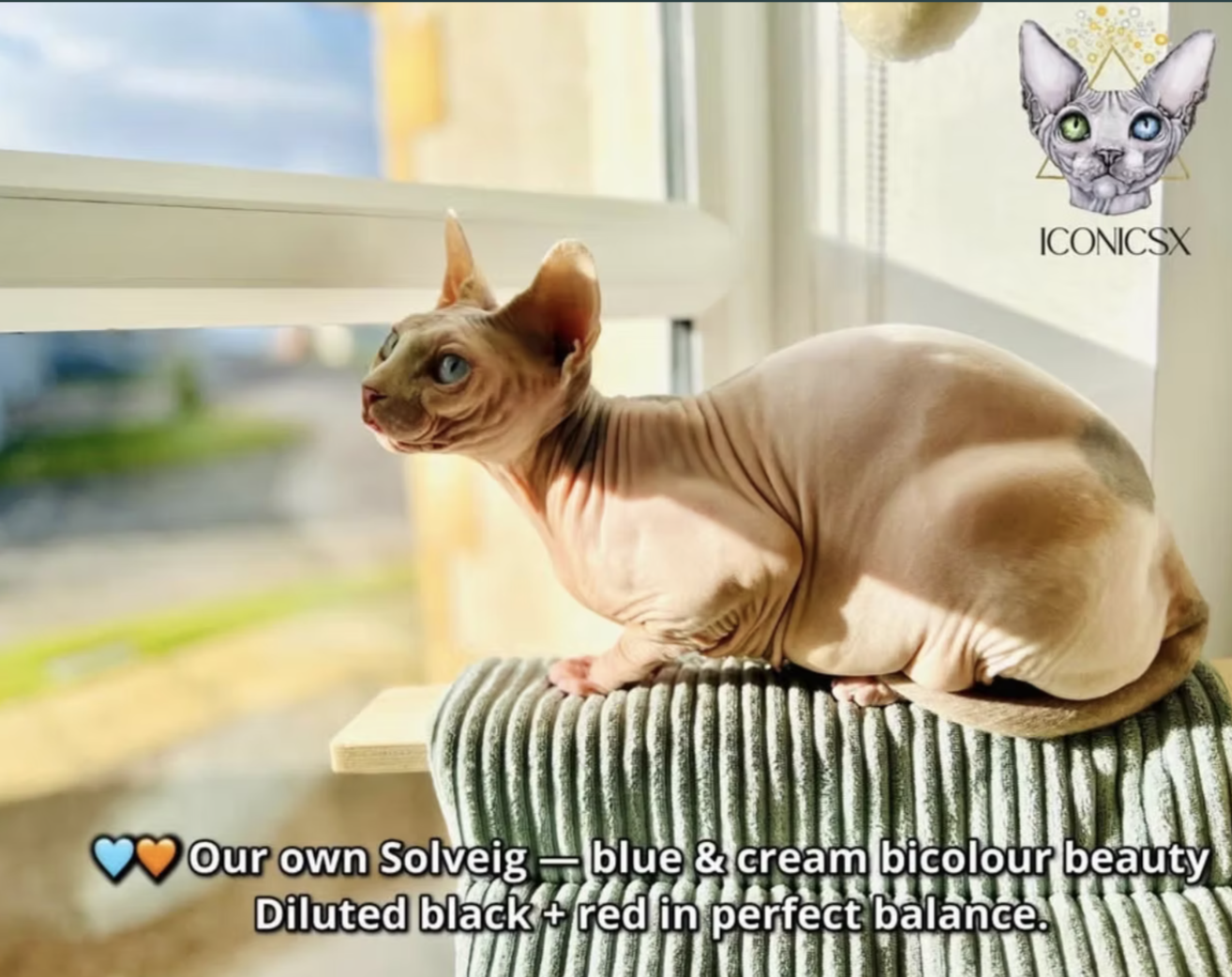
Solveig
But here’s the catch:
That only happens if the cat gets two copies of the gene (d/d) — one from each parent. Just one? (D/d) It’ll carry it, sure, but it won’t show.
So what changes?
• Black (BB or Bb) becomes blue (BB dd or Bb dd)
• Chocolate (bb) turns lilac (bb dd)
• Cinnamon (b1b1) shifts to fawn (b1b1 dd)
• Red (O) fades into cream (O dd)
Sounds simple enough, right?
But it gets messy. Really messy. Especially in hairless cats.
No fur = nothing to scatter or diffuse light. So what you think is lilac might actually be blue. And what looks like cream might just be a pale white with a warm undertone. Add daylight, warm bulbs, iPhone filters… and suddenly no one knows what they’re looking at.
Here’s what we see all the time:
• Blue cats listed as lilac.
• Chocolate called blue
• Slightly grubby whites called cream.
• And people insisting their cat is both blue and lilac at the same time. (Spoiler: genetics doesn’t work like that.)
So how do you know for sure?
You don’t. Not unless you test.
A simple swab — and the guesswork is over.
Because colour can lie to your eyes.
But genes? They don’t.