

Dominant Blue Eye (DBE) Gene
in Sphynx Cats
Genetic background, inheritance patterns and verified research on DBE expression.
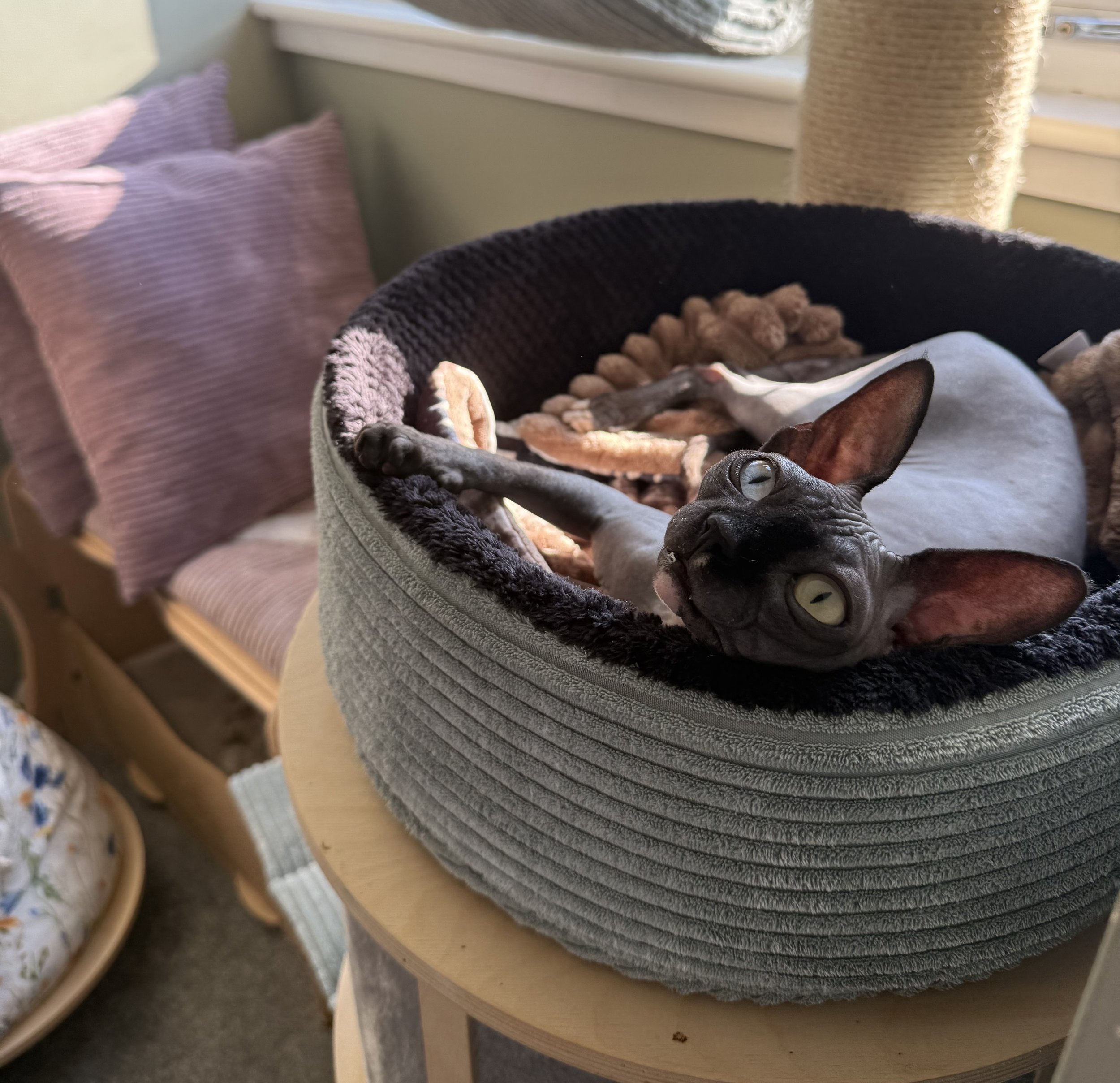
The term “Dominant Blue Eye” (DBE) refers to a group of genes rather than a single genetic variant, making it essential to specify which particular mutation is being discussed or worked with. Different DBE mutations should not be interbred due to potential risks. DBE gene enables cats to inherit vivid deep blue or uniquely coloured eyes. These mutations show dominant inheritance with incomplete penetrance. When a DBE cat is bred to a non-DBE cat, approximately half of the offspring may inherit the DBE allele, potentially resulting in blue-eyed or odd-eyed kittens.
Multiple DBE mutations have been identified in cats, each affecting eye pigmentation without white spotting. Historic examples include the now-extinct Ojos Azules in the USA and the Altai population in Russia. These were not established breeds, but lineages carrying distinctive DBE traits.
Modern DBE breeding projects including Celestial, Altai and RE-type lines are based on distinct mutations unrelated to the original Ojos Azules gene. Each mutation may vary in inheritance, penetrance, and associated coat or pigment features.
Not all carriers of DBE will express the trait visibly.
Some cats may have yellow, amber, or green eyes while still carrying the allele and producing DBE offspring. These are typically referred to as latent carriers.
Because of the gene’s incomplete penetrance and variable expression, pairings between a DBE cat and a non-carrier may produce a wide spectrum of eye colours and pigment patterns. Outcomes typically include:
• Blue eyes
• Odd eyes
• Mosaic eyes (sectorial colouring) – typically caused by irregular pigment distribution, not true heterochromia. In DBE lines, mosaic eyes may signal instability and should be excluded from breeding.
• Latent eyes (under the Celestial protocol, copper-eyed latents are not used in breeding)
• Normal eye colours (yellow, green, or blue from colourpoint genetics)
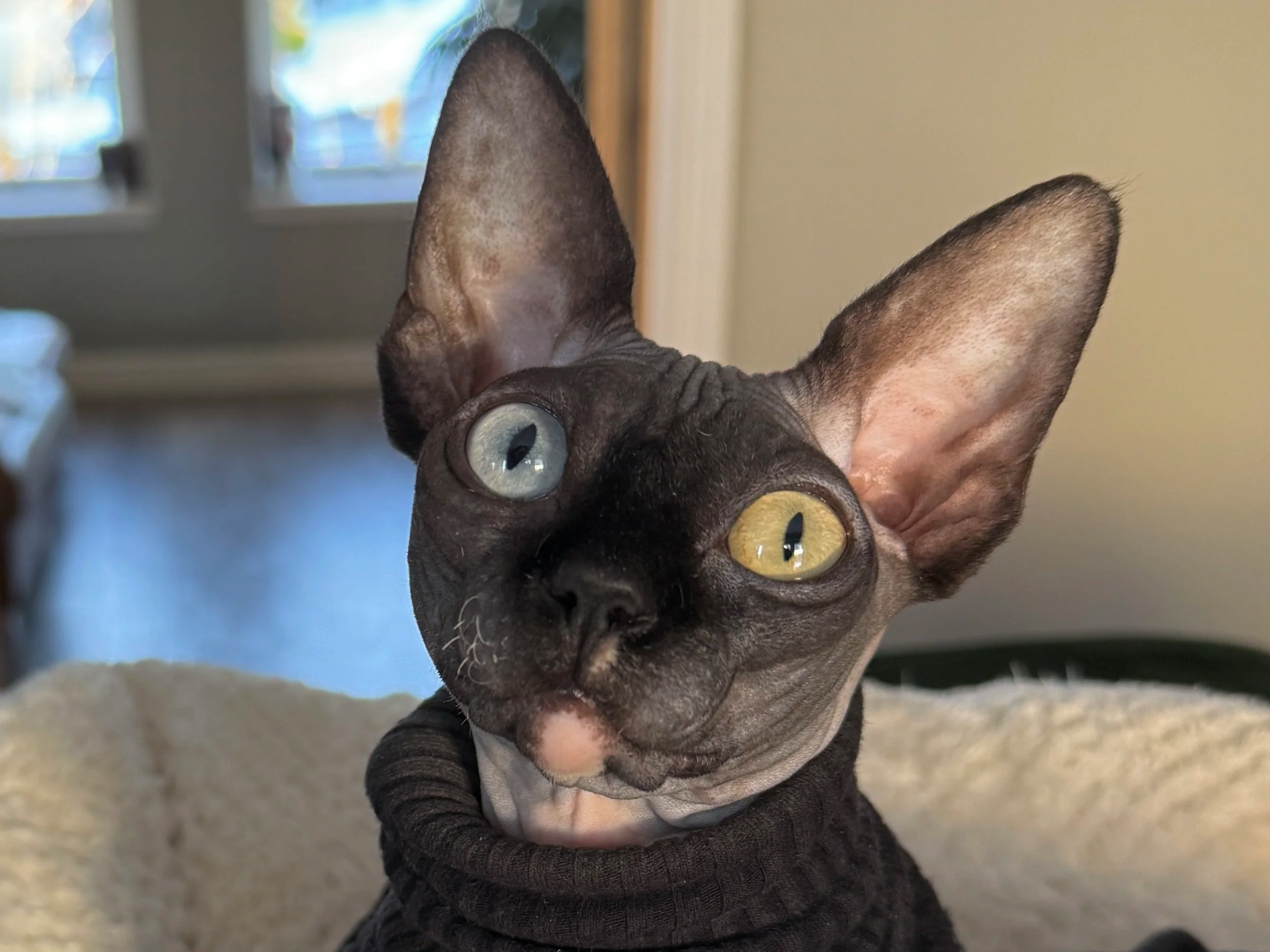
In DBE lines, kittens inheriting the DBE allele typically show some degree of white. This may range from large visible patches to minimal or overlooked markings on the chin, between toes, around the scrotum or tail tip. These markers may be subtle but genetically consistent.
Several known DBE mutations exist, potentially on different chromosomes and in various genes. Similar mutations occur in humans and other animals like mice, ferrets, dogs, and horses). Human mutations became well-known through Dutch scientist, ophthalmologist, and geneticist Petrus Johannes Waardenburg, who studied and described them between 1948 and 1951. In recognition of this researcher, the related human traits were dubbed "Waardenburg syndrome." It's important to note that many mutations that create breeds or colours in pets are labeled as "syndromes" and "genetic disorders" in humans.
For instance, albinism or any change in normal human skin colour is automatically seen as a disease. Conditions are linked to changes in genes like: ASIP (causing major metabolic issues and "yellow obesity" in humans, but creates banded fur in cats)
TYR (leading to oculocutaneous albinism and higher skin cancer risk in humans, but produces colour point patterns in cats)
KIT (causing the skin condition Piebaldism and playing a role in cancer in humans, but results in white patches in cats), and so on.
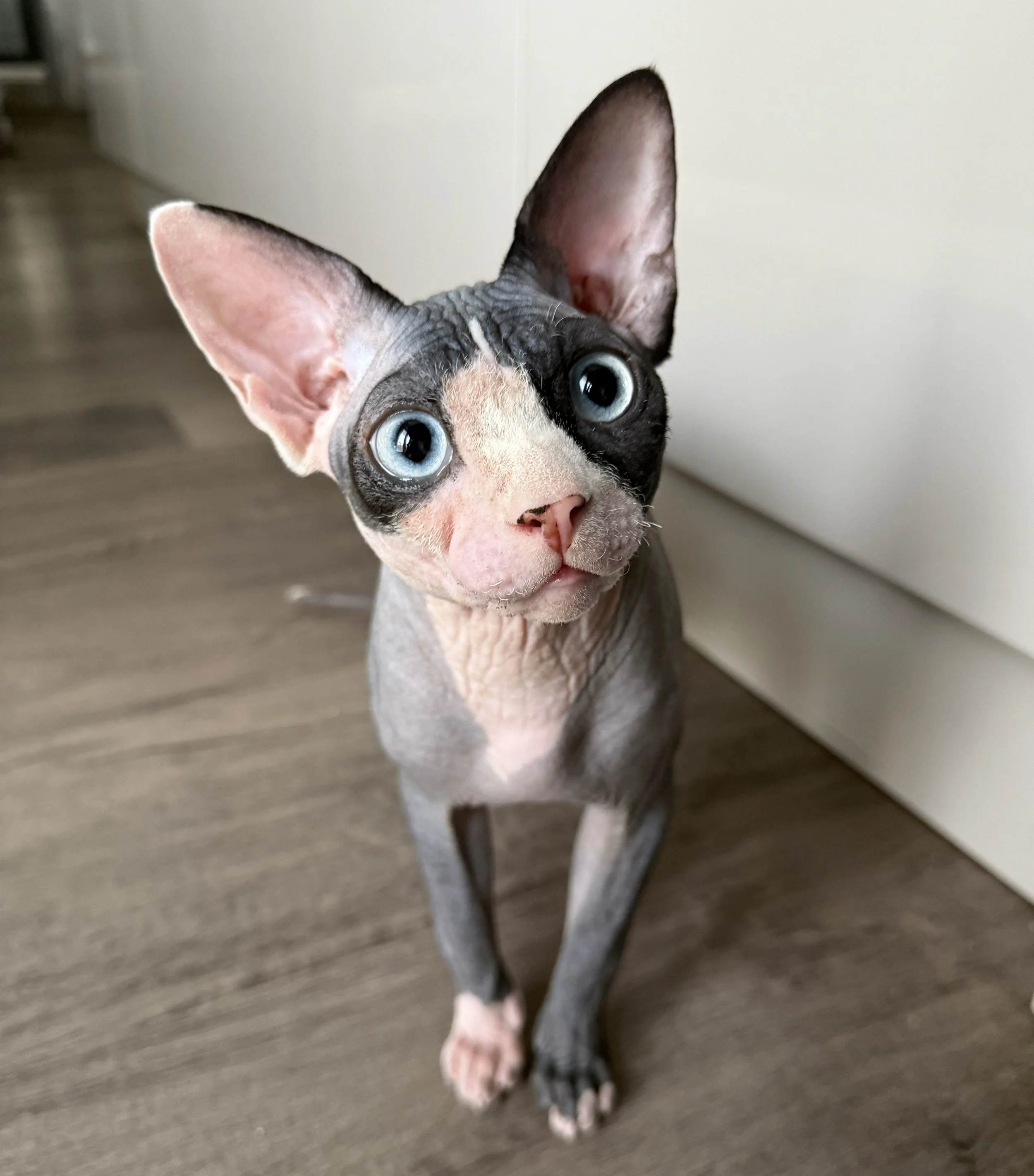
IconicSX Bruce Wayne - Dominant Blue Eyes
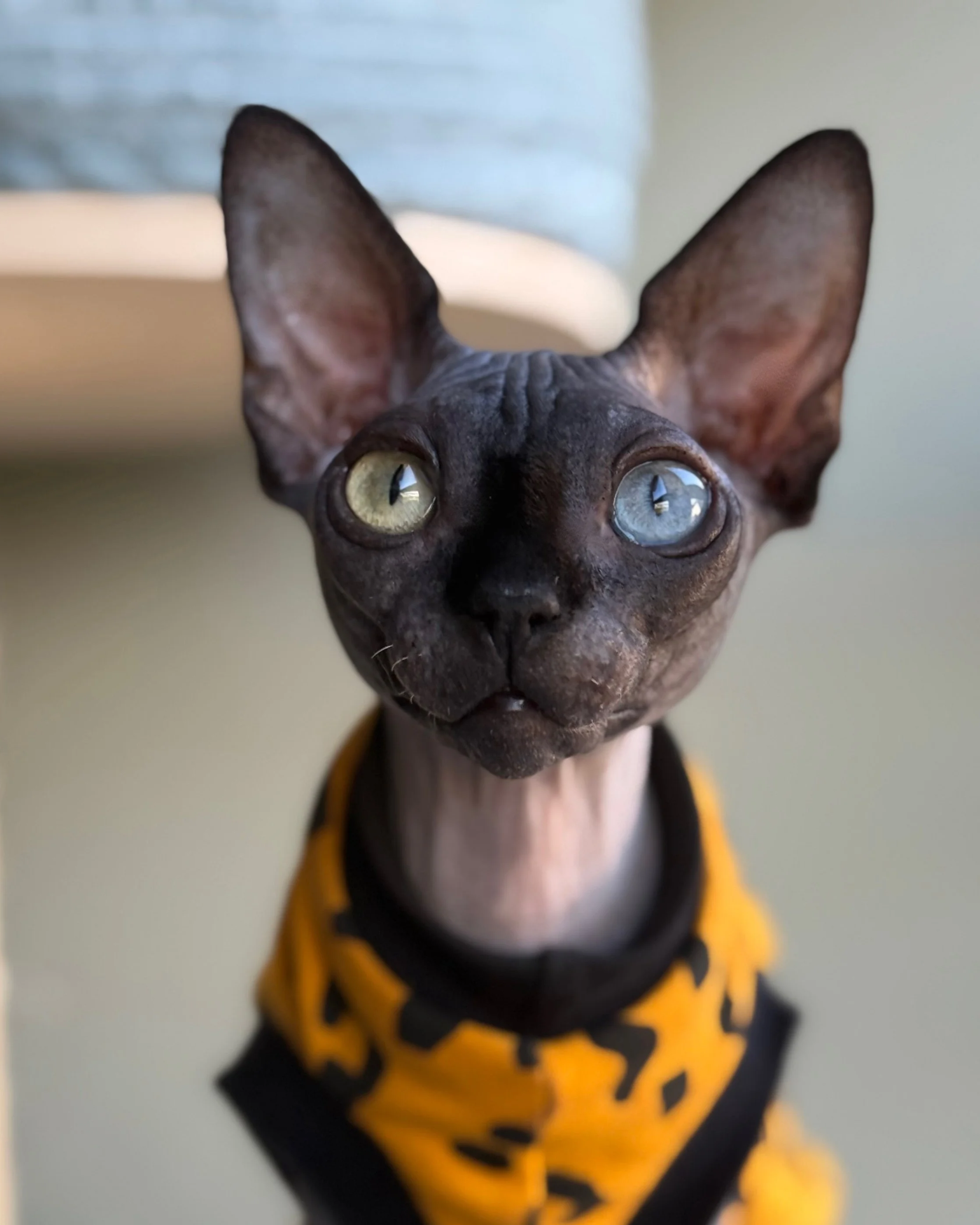
IconicSX Selina Kyle - DBE Odd Eyed
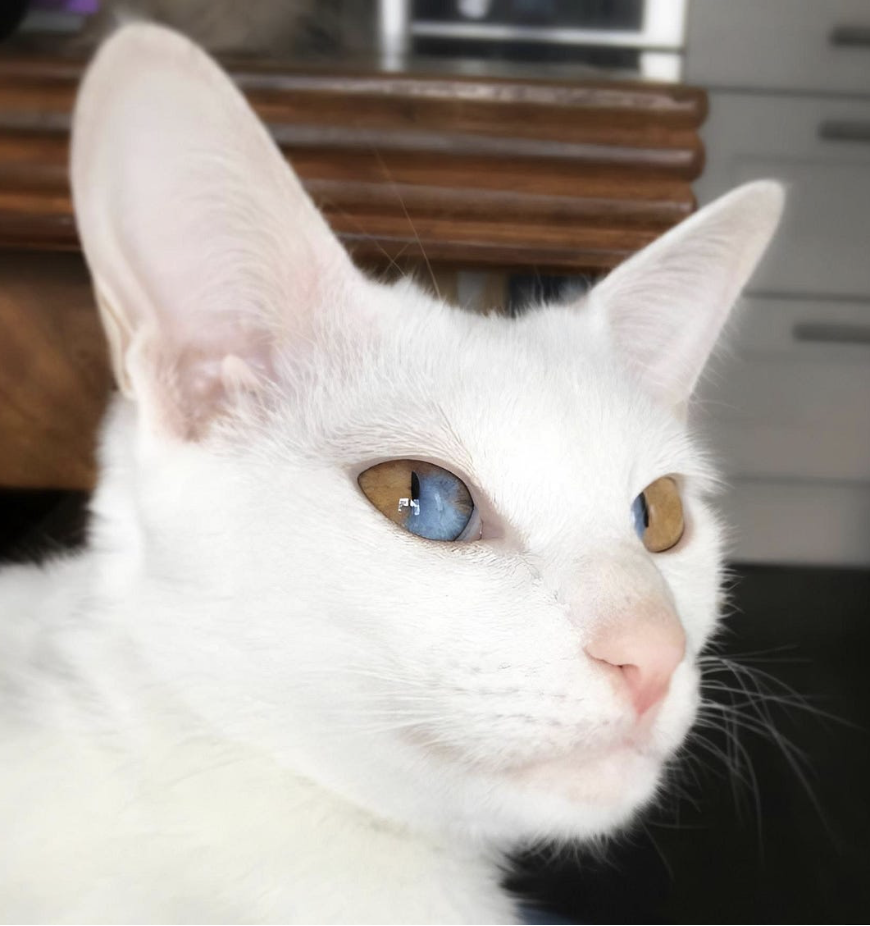
Example of Mosaic Eyes
Waardenburg Like Syndrome in DBE Cats
Waardenburg Syndrome is a genetic condition commonly associated with hearing loss and pigmentation anomalies in humans. In cats with the Dominant Blue Eye (DBE) gene, certain traits linked to Waardenburg-like syndrome and some features may be observed, though the connection is not fully understood or confirmed in all cases.
The condition is often characterized by:
• Heterochromia or Dominant Blue Eyes: Cats with the DBE gene may have striking blue or odd-colored eyes, sometimes in association with other pigmentation patterns.
• White Spotting or Coat Depigmentation: Cats carrying certain variants of the DBE gene might display a white coat or areas of white spotting.
• Hearing Impairments: In some cases, DBE homozygous full white or van cats may exhibit partial or complete deafness. It is also observed in heterozygous DBERE cats.
Also Waardenburg like syndrome is more commonly seen in cats with a predominance of the white coat gene (KIT) rather than the DBE gene alone.
• Premature greying
• wider nose and shortened tail.
Waardenburg Syndrome type 3 and 4 is not present in cats.
With the exception of the hearing loss, these are cosmetic characteristics and much less severe than, for instance, skeletal abnormalities in Scottish Folds or spinal problems in Manx.
It’s important to differentiate between traits caused by the DBE gene and those linked to Waardenburg Syndrome. While some studies suggest that Waardenburg-like traits may occur in DBE cats, it is not definitive that the DBE gene itself causes this syndrome as DBE gene can be present together with a white gene or there could be 2 or more different DBE (re+cel / re+ alt) present in a cat DNA profile . Research is ongoing to explore the genetic mechanisms behind blue eyes, pigmentation, and their potential health implications.
All our DBE and Odd Eyes breeding cats and their kittens undergo BAER tests to confirm they have no hearing issues. Additionally, we contribute DNA samples to various research projects and are deeply involved in studying the different variations of the dominant blue eye gene.
HISTORY OF THE DBE Genes
DBE Alt
In 1997, Lyubov Borisovna Zikeeva from Ust-Kamenogorsk, Kazakhstan, noticed cats with blue eyes roaming the streets and decided to investigate. As the owner of Darlin cattery, she pioneered efforts to resurrect a genuine blue-eyed feline breed. The first Ust-Kamenogorsk Altai was a regular semi-long-haired house cat with white marks, a blue right eye, and a yellow-green left eye.
The cat magazine "Friend" (issue 8/9, August-September 2004) said Vera Sokolova from Ust-Kamenogorsk owned the first Altai cat. In 1995 or 1996, she had a black cat named Fyodor with blue eyes and a white-tipped tail, looking like the American Ojos Azules found in California.
Fyodor's DBE gene was dominant but not always expressed.
There is one know case of mating DBE ALT X DBE ALT with resulted with 3 homozygous kittens. 2 were bicolour and did not have hearing impaired, while the 3rd kitten was white and deaf.
There is unknown if the kittens or their parents were also a carrier of white / white spotted gene or not.
DBE ALT come in solid, tabby, or tortie shades, with or without white patches. A unique white tail-tip, sometimes covering up to a third of the tail, is their trademark.
DBE Cel
DBECEL gene was previously known by breeders as the DBE Altai gene . It was identified in 2024 by prof. Marie Abitbol, and from this time it was separated from DBE ALT gene . DBE CEL is an autosomal dominant trait with variable expression and incomplete penetrance. DBE-CEL cats are not linked with deafness, premature greying and do not show the hallmark dystopia canthorum, a key diagnostic feature of Waardenburg Syndrome Types 1 and 3.
“Dystopia canthorum was not observed in adult DBE cats from Altai, Celestial, British, Sphynx, and Siberian genetic backgrounds.” (...) "The variant (DBECEL) was found in the Celestial breed, and the variant has not been associated with deafness".
(Different Founding Effects Underlie Dominant Blue Eyes (DBE) in the Domestic Cat, Marie Abitbol et al. Animals (Basel). 2024.)
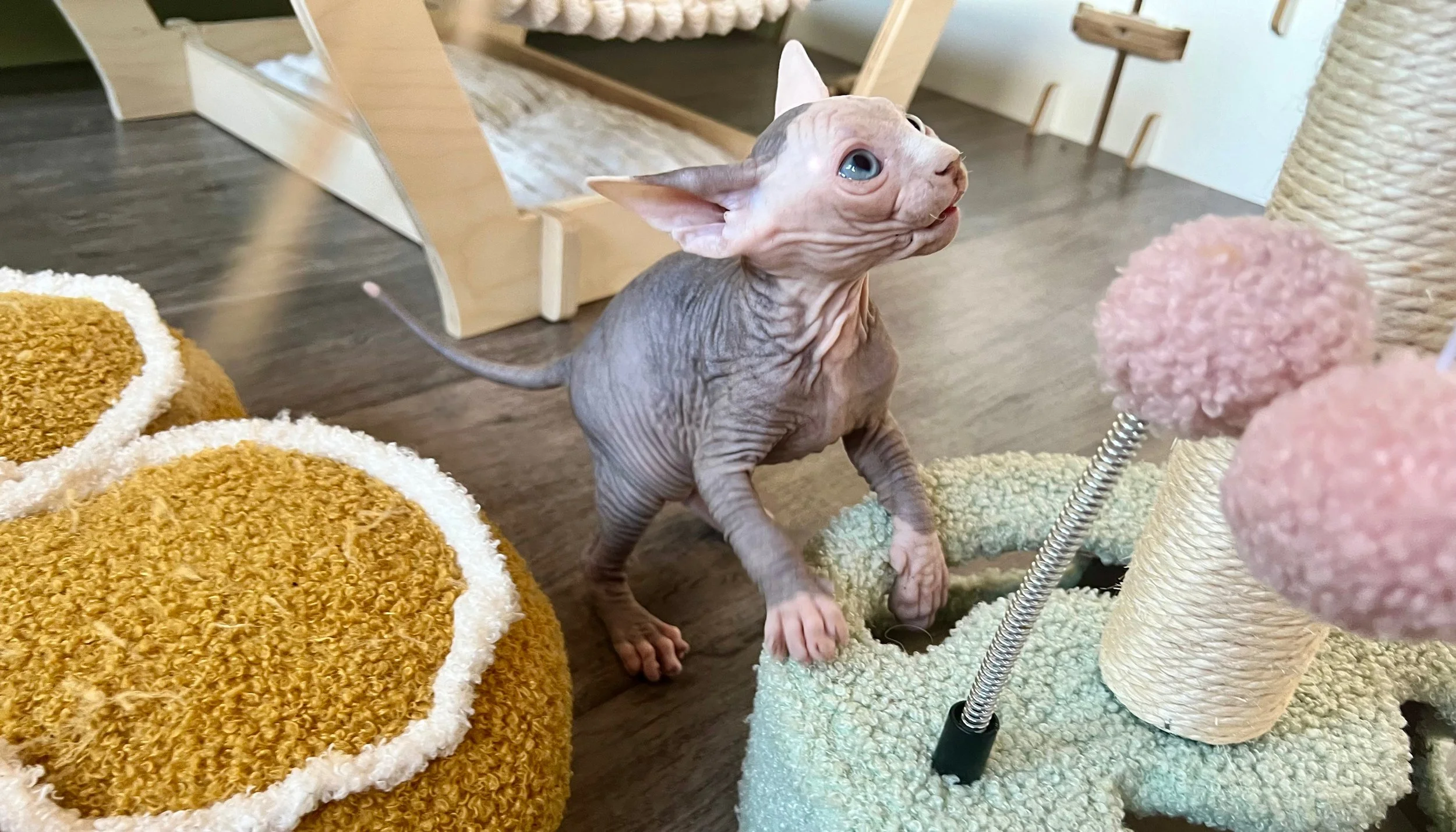
IconicSX Maverick showing a white tail tip
DBE RE
The gene is referred to as the Rociri Elvis DBERE gene and it was considered a spontaneous mutation in Elvis ( Maine Coon), DNA found it to be a latent gene (hiding in white cats) . The gene can skips a few generations. The genetic variant known as DBERE ("Rociri Elvis" gene) causes deafness. The phenotype of the heterozygotes resembles human Waardenburg syndrome type 1 and 2A . It seems likely that homozygous DBERE is lethal. Special examination methods (BAER test) is needed to determine if there is impaired hearing. DNA testing to identify the DBERE variant can easily clarify whether a DBE phenotype cat has a gene variant that is associated with deafness.
DBERE is often seen in Abyssinian, American Bobtail Shorthair, American Curl Shorthair, American Wirehair, Birman, British Shorthair, British Longhair, Burmese, German Shorthair, German Longhair, European Domestic Cat, European Shorthair , European Longhair, Maine Coon, Mongrel - Various Breeds, Norwegian Forest Cat, Persian, Ragdoll, Russian Blue, Scottish Shorthair, Siamese, Siberian Cat, Somali and in other breeds; especially if they were outcrossed with the above for the certain trait .
DBE AGO (Agostino Dominant Blue Eyes)
Recent scientific research has identified a fourth mutation in the PAX3 gene linked to the Dominant Blue Eyes (DBE) trait in cats. This unique mutation was found in a Maine Coon lineage known among breeders as the “Agostino line.” The mutation, called PAX3:c.160del and located in exon 2 of the PAX3 gene, causes a shortened PAX3 protein that loses about 78% of its normal structure.
All blue-eyed cats in this line were carriers of this mutation (heterozygous), while non-DBE cats did not carry it. The study included over 300 control cats with no presence of this variant.
Additionally, the research highlighted the existence of latent DBE cats in another well-known line (“Rociri Elvis” or DBERE), meaning that the DBE trait can be hidden genetically even if it is not always visible in appearance.
Current Research and Developments.
Recent studies have identified specific variants in the PAX3 gene associated with the DBE trait in cats. These findings have enhanced the understanding of the genetic mechanisms underlying blue eyes in cats and have implications for breeding strategies. Recent research has identified three known variants of the DBE gene.
Under no circumstances should two different DBE lines ( for example, dbe cel + dbe re) be mated together. Also, the mating of two DBE blue-eyed cats from the same line should be avoided.
The Future of DBE Breeding.
As interest in DBE Sphynx cats continues to grow, the emphasis remains on ethical practices and genetic research. Breeders are working toward a balance where these captivating cats can flourish without sacrificing health or diversity.
FAQs
-
No. Blue eyes can come from several different genes. Cats with the colourpoint gene (cs/cs) — like Siamese Point- have blue eyes because pigment only develops on cooler parts of the body. White or white-spotted cats can also have blue eyes, but this is due to pigment loss. True DBE eyes, however, come from a completely different genetic mechanism — they appear naturally, even in fully coloured cats.
-
DBE cats can have intense, deep blue eyes — or one blue and one coloured eye — while still having solid coat colour. Black, chocolate, lilac, red, tortie … all possible. Their blue eyes are not linked to deafness or pigment loss, unlike in white or white spotted cats.
-
DBE is a rare dominant gene, but it behaves unpredictably. Statistically, with one dbe parent - each kitten has a 50/50 chance of inheriting it — yet nature doesn’t always follow math. Sometimes every kitten in a litter will have DBE. Sometimes none. It’s a genetic roulette.
Some kittens inherit the gene but don’t show blue/ odd eyes at all — this is called latent DBE (the gene is there but not expressed). Others simply don’t carry it. That’s why even if a parent has DBE gene, it’s not a guarantee the offspring will be carriers if they show no expression.
The only way to confirm DBE status is through a verified genetic test, not by eye colour alone.
-
No — absolutely not. Flash photos can create false reflections, especially in newborn kittens. Some people take pictures of kittens that barely opened their eyes and claim “red flash” as proof of DBE or odd eyes. That’s not genetics — that’s light bouncing off underdeveloped pupils.
Real DBE eyes are confirmed by DNA, and eye colour once it is developed. Flash can reflect differently in each eye and make a kitten look odd-eyed when it isn’t. Genuine DBE blue shows in daylight, not under artificial light.
-
The eye colour may start to change at the age of 4 weeks old. Usually between 8 and 12 weeks. Some kittens develop their DBE tone later — especially odd-eyed ones, where each eye matures at a different pace.
-
Only through DNA testing. A true DBE cat must:
– test negative for white (W) and white-spotted (ws) genes,
– test negative for colourpoint (cs/cs) - 2 genes as seal point is recessive so a cat needs to carry two copies of cs gene to express blue eyes, one copy of cs gene is ok as it does not make eyes blue
– and carry the verified DBE variant.
If any of these other genes are present, blue eyes may be caused by TYR (point) or pigment loss (KIT), not DBE — and such a cat should not be advertised as Dominant Blue Eyed cat.
-
No. Blue from DBE remains stable for life. It doesn’t fade or turn greenish over time, as can happen with pigment-based blue eyes.
-
No. DBE Cel eyes are not linked to deafness. That issue is associated only with pigment-loss genes (white or white-spotted), or DBE RE mutation.
-
Because our line carries only the DBE-CEL variant — with no white, no white-spotted, no colourpoint genes. Every blue or odd eye in our cats comes exclusively from the Dominant Blue Eye Celestial gene. Each result is verified by genetic testing, ensuring purity, safety, and truth in what we claim.
Special Thanks.
We are deeply grateful to Professor Marie Abitbol for her groundbreaking research on DBE genes and for inviting us to join her research project, which has advanced our understanding of these fascinating traits.
Our heartfelt thanks also go to Sarah Hartwell for her incredible dedication to classifying, describing and organising genealogical data for DNA studies, which are invaluable to the breeding and scientific communities.